Janina Rajakangas Striptease
Susana Amarante Duarte Finding Anna
BLOOM! tame game
Nudity in contemporary dance has become commonplace, but some of us never tire of it especially if it's there to make a point. That old show biz vulgarity ‘tits'n'ass' certainly dominated the season's opening night thanks to two trios that parenthesised a clothed miseryguts of a solo.
Janina Rajakangas' Striptease delivered its title, only in reverse. Topless in flesh-coloured panties with faux pubic patches, the distinctively different Jane Leaney, Tina Krasevec and Rajakangas herself started out striking hyper-sexy upstage poses that increased in onanistic intensity as they gradually donned tops (with drawn-on breasts) and tights (again, pubically-enhanced). The women sporadically launched themselves into the larger playing area via sweeping twists, turns, tilts and tumbles accompanied by spacey electronica or, more peculiarly, Andy Williams' cover of the kitsch Theme from "Love Story." Were they apes, angels or something in-between? By the close they lay in a heap like broken, faultily wired mechanical dolls. The ideas motivating this intriguing slice of feminist sexuality weren't fully-formed, but credit to the cast.
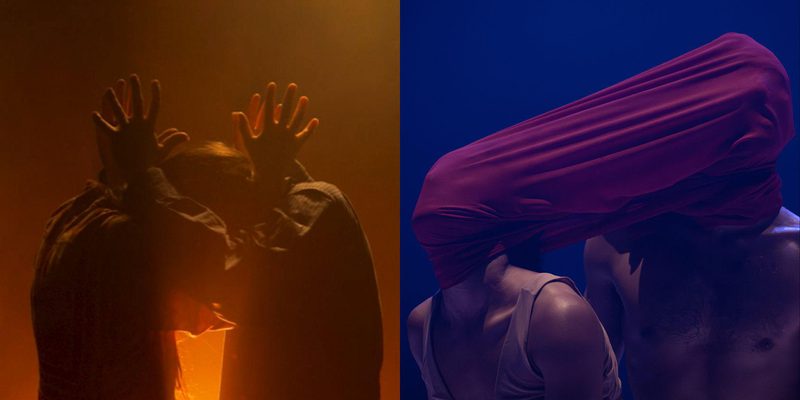
Interest sagged badly with Finding Anna, a far too obscure, drably spare and quasi-psychological solo by Susana Amarante Duarte (of DENSEMBLE/Contemporary Dance) for Isabel Ollé. The latter's off-kilter placements, moments of clenched tension and repeated floor-bound body slams - plus the soundtrack's muffled, scrambled violence - suggested a possible history of loss and/or abuse. Two abandoned chairs and an untouched standing microphone left were, I suspect, meant to be profoundly telling symbols - but of what?
The literally cheeky conceptual comedy Tame Game by the Euro-collective BLOOM! was the night's saving grace. Here three cute and bearded young men - Csaba Molnar, Moreno Solinas and Igor Urzelai - used frames and whistles to try and proscribe each other's unbridled impulses. But, in a clever and engaging example of an animal eating its own tail, by imposing such severe limitations they merely created greater chaos and slapstick discord. The audience's giddy reactions indicated that these playfully serious, bum-baring boys hit the right spot.
Donald Hutera
As the streamers and jubilation of New Year are cast aside, we await new offerings of dance from Resolution! 2011. Each season has only one running thread: expect the unexpected, and this opening night certainly followed suit.
The responsibility of opening the series fell on the shoulders of Janina Rajakangas with Striptease. This piece started with three, topless, female dancers wearing nude underwear complete with fake pubic hair. Immediately, the piece undertook a comedic tone through mocking, erotic movement and noises. The dancers excellently portrayed masculinity through bicep curling poses and low, aroused, grunts - possibly in a bid to mimic the overwhelming affect the female form has on men. Similar segments ensued, interspersed with unison movement sections where dancers explored every imaginable body part. However, the relationship between the two ideas seemed ambiguous, deeming the piece somewhat disjointed. Ultimately, the audience witnessed an evening of seduction unfold in reverse, until the women were dressed and re-acquainted with their everyday personas.
Second on the agenda was Susana Amarante Duarte's Finding Anna. This solo promised a voyage through a childhood memory, however, minimal evidence of this was presented. Instead, extremely repetitive nodding, scanning of the room and superfluous gestures followed. I was waiting for this piece to start until it finished. Very tedious.
Nevertheless, the evening ended on a high with BLOOM!'S Tame Game and the exploration of our inability to stop interfering with people, the environment and, well, anything the trio of male dancers could get their hands on really. They could not help themselves from probing, smacking or stripping in various surroundings which resulted in hilarious consequences. There was a definite childish element to proceedings with dancers testing their self restraint. Suitably, movement stemmed from games which unveiled real camaraderie amongst the dancers. Glimpses of obvious technical skill were provided in outbursts of stop/start energy as they succumbed to the impulsion to move.
Celia Moran