Itamar Serussi Sahar The Netherlands Undo
The Ticket Theatre Dance Lexi Bradburn Backing Dancer
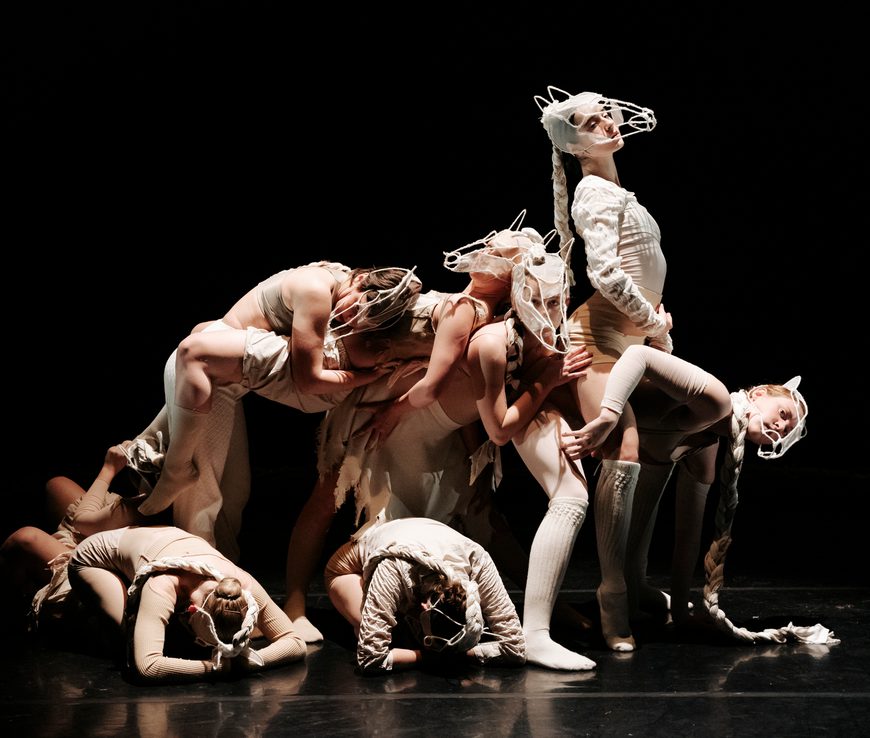
Briar Adams Surface Tension
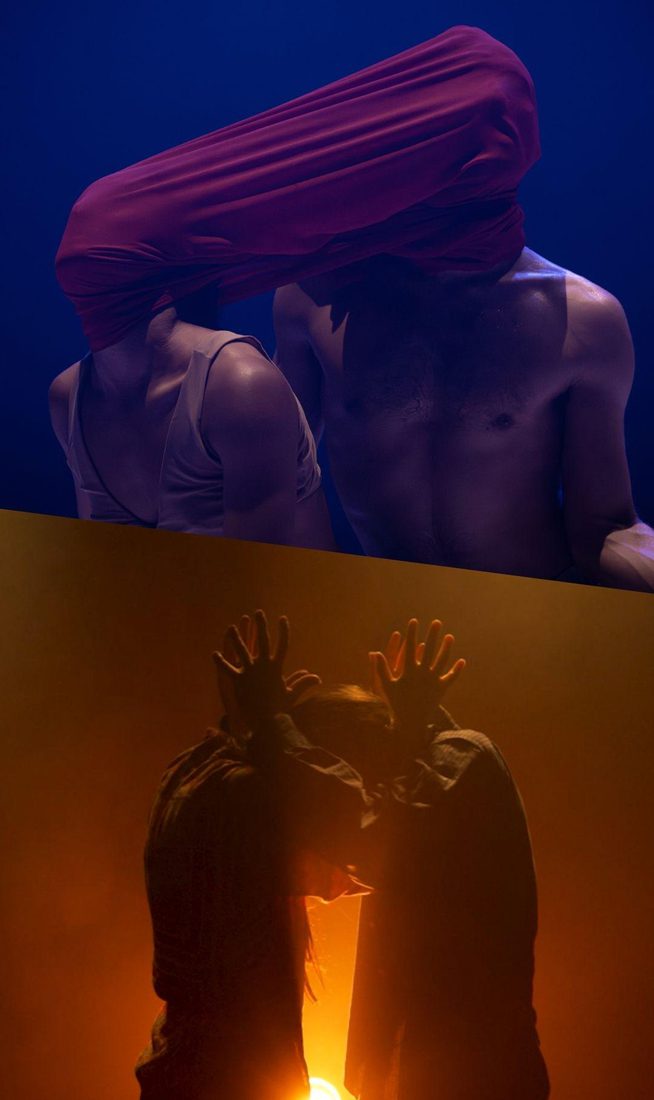
Itamar Serussi Sahar's Undo looks like it's been made with 3D modelling software and a digital video editor. The five dancers, in form-hugging tights, move as if someone were twiddling with their buttons: arms paddle stiffly, heads vibrate, there are odd spinal kinks and splat-footed jumps. Everything is timed to a taut electronic beat, and the composition has the control-freakish feel of a geek at a keyboard: phrases are mirrored, multiplied, rotated, rewound, speeded up, and there's a recurring freeze-frame tableau. Undo has a high visceral impact: even when standing still the dancers sometimes pulse in place, and we register the effect as if our own eyes were throbbing. The dancers are superbly drilled, and if we don't see them as personalities we never forget that they're flesh and blood.
Lexi Bradburn's Backing Dancer is a jukebox piece: a sequence of classic popular songs (sung live by amiable crooner Steve Jeffery), accompanied by a trio of female dancers. The backing dancers start out smooth and swishy, but later take swipes at Jeffery with their feathered fans, eyeball him with blunt hostility, or upstage him altogether. There are some comic moments - dancers slinking off when Jeffery comes over all operatic; an unhappy octopus costume - but overall this is only faintly amusing as entertainment, and faintly interesting as choreography.
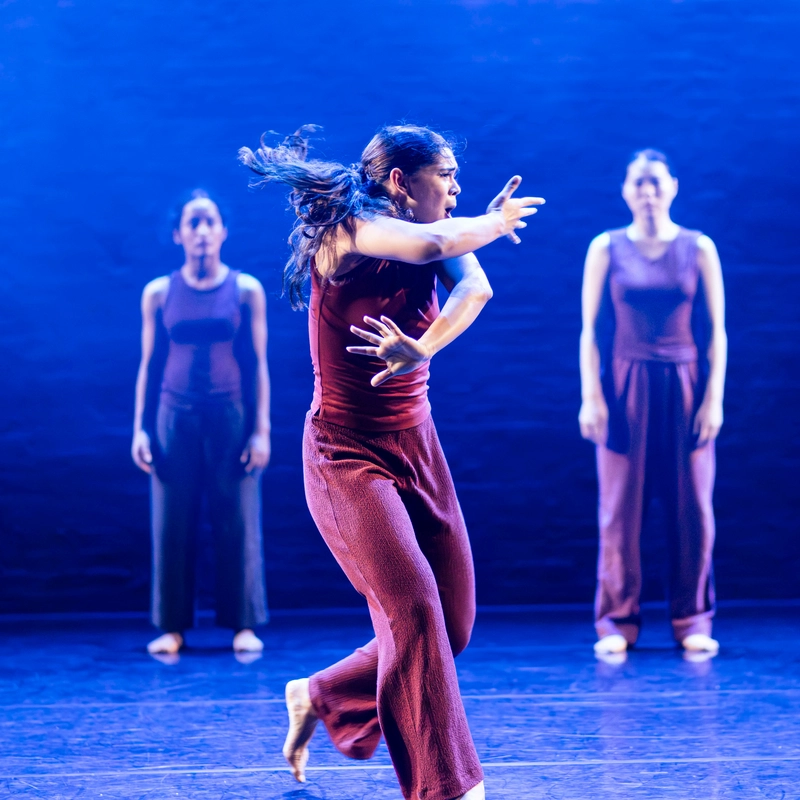
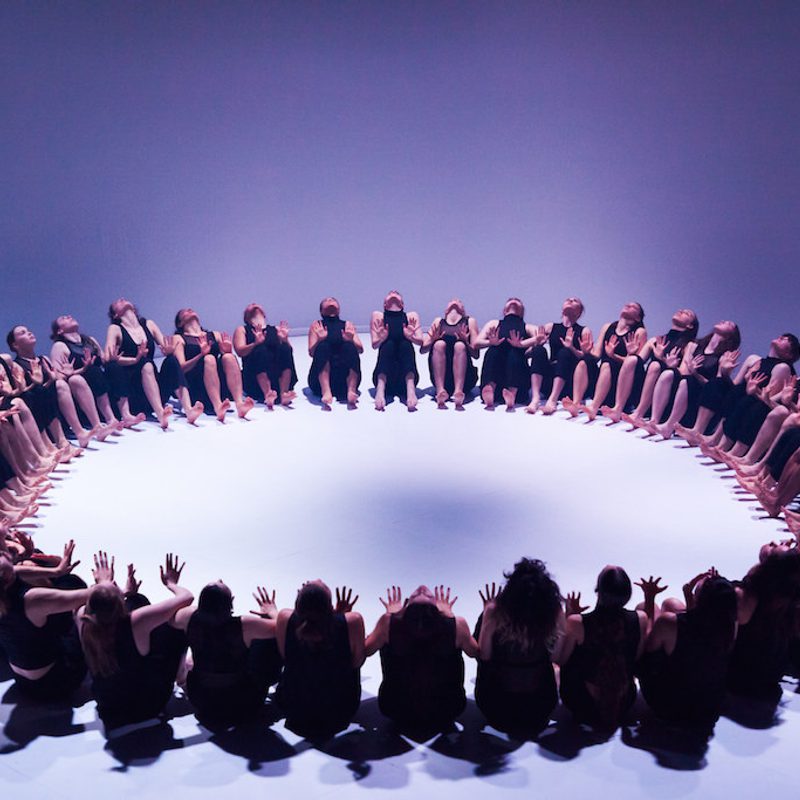
Backing Dancer has a clear premise but weak material; Briar Adams' Surface Tension is the reverse. It's also a much better piece, which goes to show that effects are more telling than intentions. True, Surface Tension often mines a generic modern-dance middle ground - amenable music, hefty-flowy-swoopy dancing - but sometimes the choreography comes into its own, as in one episode where the eight dancers are tugged side to side in ragged patterns, so that you sense both the tidal undercurrent of the composition and the splashy textures of the individual phrases. If the piece sometimes seems to cast about for a purpose, in such scenes it doesn't need one.
Sanjoy Roy
Undo is a quintet of striding and chin-jutting dancers. Minimally clad in sharp black spandex, they flick and hover with fantastic control and self conscious bravado. They snap impressively between tension and easy coolness. Initially the wonder of the dancers is lost amid the consistent sound and their constructed behavioural oddness. Yet as the piece unfolds there are moments of silence in which the rhythms and slaps of the dancers' bodies are vividly exposed. Stillness shifts the audience's focus in and out of the intricacies and textures of the piece. The performance is characterised by flippancy, broken by the concreteness of the dancer's stares and repeated patterns. Yet neither the loose nor the defined really find their footing. Despite this, at the end of the piece my focus is so tightly pulled towards the dancers' almost invisible pulsing that I find myself pulsing in my own seat. If only there is more of this.
Backing Dancer has a satisfyingly simple dramatic setup. Three backing dancers (bound by ankle clinging golden skirts and tottering in heels) and a singer (brilliantly smooth, flawless and cheesy). The dancers, slowly gathering frustration, lose their inhibitions and their skirts, leaving the singer increasingly hen pecked. The comedy is repetitive and the singer's acting becomes caricatured, however the insistence of the synchronised, showgirl dancing successfully lends itself to slapstick and the dancers carry it well. They are in fact a pleasure to watch. It is odd, sexy and entertaining in the way that show dancing is. The peculiarity could do with some exploration though - what if the dancers never got free of their skirts or the singer somehow retained his ghostly control? I was left to wonder.
Surface Tension opens onto a crowded stage. A forest of bodies with wriggling duets and solos emerging from the undergrowth. The fluid dancing has character and energy, but this is lost in uncertainty - of performance and choreographic structure. The stage carries great shifts of movement, however there are such constant changes of formation and combination, without there being any development of intensity or tension, that the energy is lost to the loose air.
Eleanor Sikorski