Lina B Frank The Keeper of the King's Conscience
Andres de Blust Mommaerts Chirigashi
MAAIKOR (Keren'Or V.Pezard) Rooms of Our Hidden Geometries
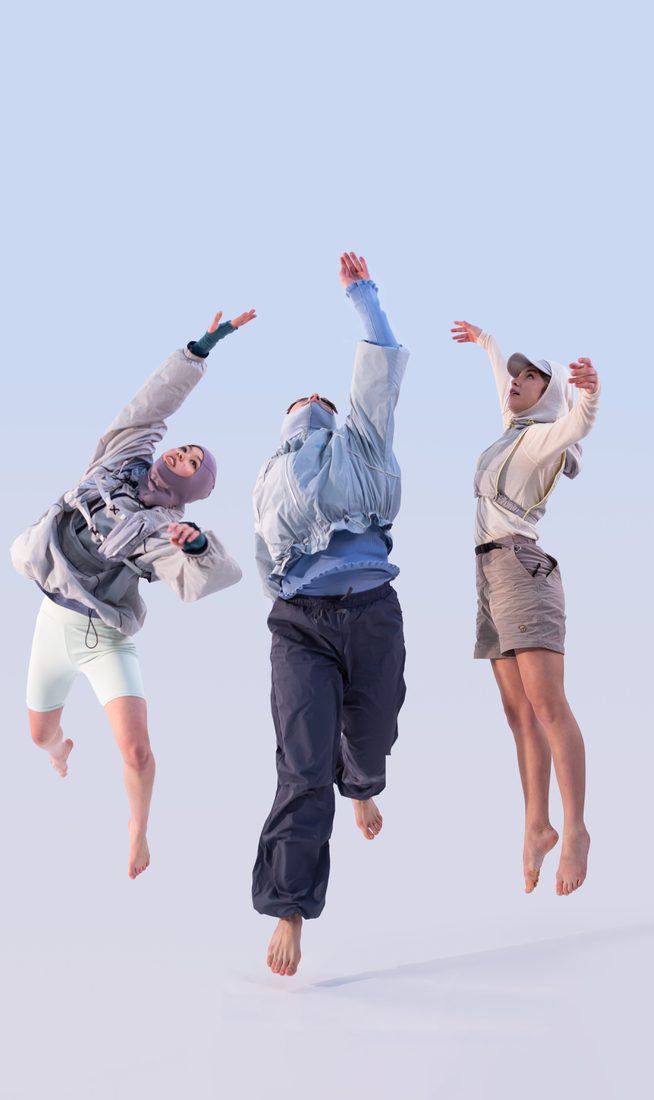
Lina B Frank's dance/circus piece The Keeper of the King's Conscience takes in faith, Jesus and Sir Thomas More, she tells us in her notes, but that weighty combination is possibly too much to unravel in twenty minutes. There's a promising start, with a corde lisse performer ascending her rope with such reverent moves, eyes skyward, it's as if it's her path to enlightenment. She flings her arms outwards to hang like a cross, but such stern religious imagery is countered by the appearance of three stooge-like clowns and a red-clad lady who totters across the stage like a wayward Mary Poppins. There's definitely something going on here, but it's difficult to glean the relationship between the different figures, and what their actions all add up to.
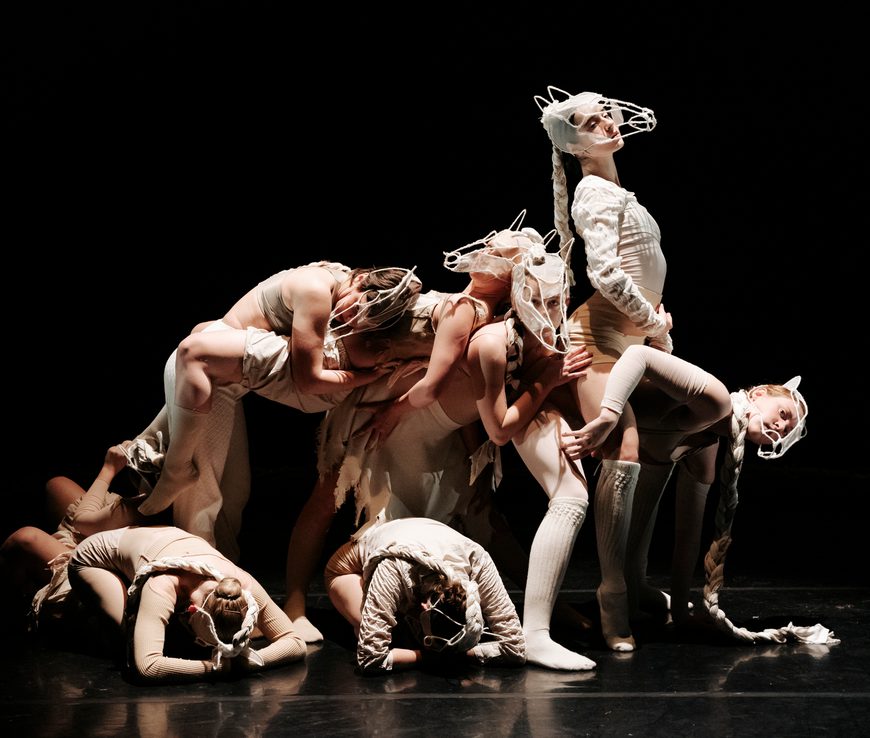
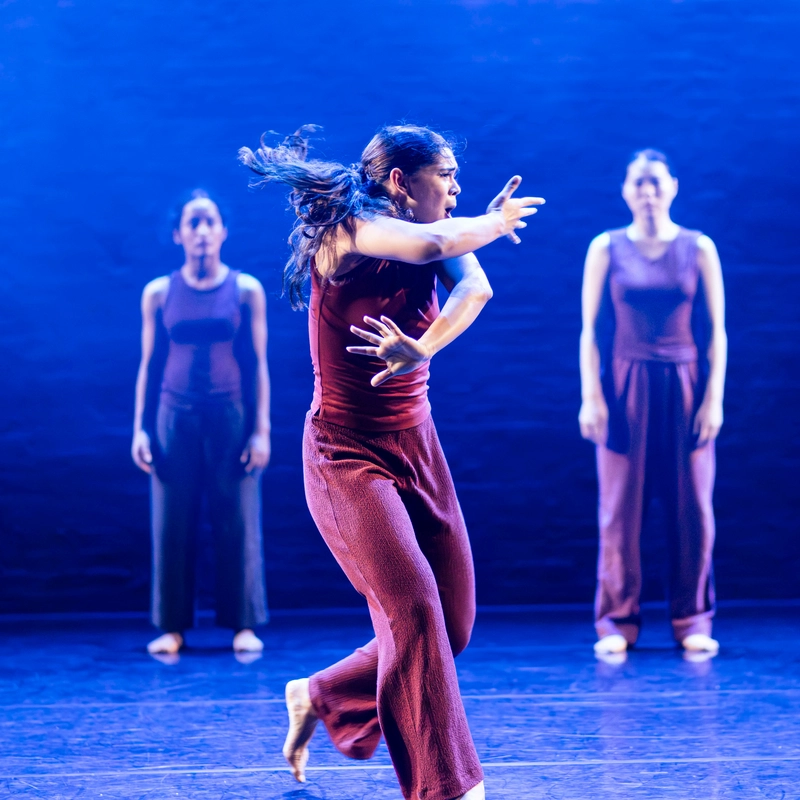
Andres de Blust Mommaerts' Chirigashi is a promising first piece of choreography. It helps that the dancers are all drawn from Richard Alston Dance Company, where de Blust Mommaerts also dances, and there are echoes of Alston in the movement, in its elegant long diagonals and semi-classical styling. But there are signs of an original voice too, one that's rougher round the edges, with shaking heads and shrugging shoulders and lots of earthbound floorwork. Dancer Hannah Kidd is particularly good - she has a natural way of dancing with her face, as well as her body, which gives character to this fairly abstract movement. Very watchable.
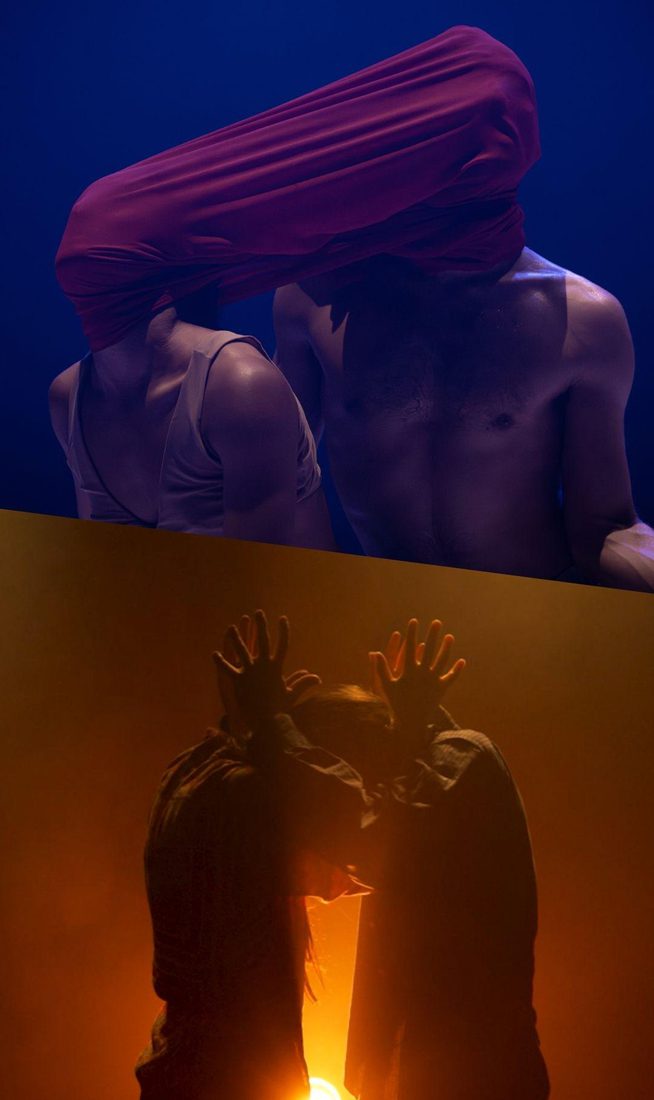
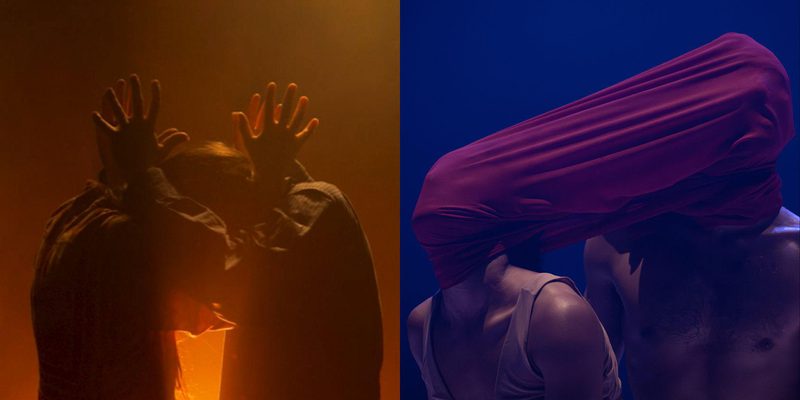
The final piece in tonight's programme, Keren'Or's Rooms of Our Hidden Geometries is a meeting of dance and poetry, but as the text is in French, those of us with limited linguistic skills only had the movement to go on. The abiding impression? A stage that almost rattles with emptiness, bar the slow, protracted coupling of dancers Anastasia Kostner and Roberto de Gregori, moving earnestly through statue-like poses - there's nothing joyful about this union. A second segment features dancer Guiomar Campos Acosta softly rolling and folding her body. This coda contains the most interesting material of the piece, but it's merely a snatched few minutes. Would be interesting to see what it could become.
Lyndsey Winship
Having read that Lina B Frank's offering ‘is a bit about Jesus, a bit about the arts and possibly faith', I predicted this work would not be a straightforward ride. Whilst it was possible to guess at which quasi-biblical character each performer could represent - the clownish dungaree clad trio as disciples, the composed corde lisse (vertical rope) artist as Jesus who is killed and then mourned by the lady in red (Judas?) - such connections would have remained oblique had it not been for the programme notes. The choreography is simple and playful, and littered with Mats Ek-like gesture, albeit less refined. Whilst the five-strong troupe is engaging, characters need developing and there is no real sense of arrival.
As you may expect from members of Richard Alston Dance Company, technique in Andres de Blust Mommaerts' choreographic debut was clean, sharp and swift. There were echoes of Alston in the use of line and structural devices but also touches of de Blust Mommaerts' own style in the low-level floor work and percussive, fleeting jumps. The expressive glances and seductive gestures of the trio hint at underlying intimacy which gives subtle intention to the movement. This is a well-devised and satisfying work that could be developed beyond its thirteen minutes to give a little breathing space to the highly-charged choreography.
If the former work left you breathless, the slow, trancelike wanderings of the final piece could almost lull you to sleep. Inspired by poetry, Keren'Or's choreography comprises pedestrian movement, yoga and release-technique which gives the performers a clear sense of weight and grounding but which can also become somewhat monotonous as you long for a change of pace and dynamics. There are moments of intrigue, especially in some of the solo pieces and the performers have presence but more variation is called for.
Katie Fish